Choose paddle weight, grip and handle fit
Choose paddle weight, grip and handle fit with clear specification limits and practical checks.
Start with the paddle you already know
Write down what feels comfortable or awkward about your current paddle before comparing specifications. Useful observations include whether the grip feels crowded, where your second hand lands and whether the paddle feels difficult to reposition. These are your preferences, not measurements of a product’s performance. A specification shortlist can narrow options without guaranteeing comfort.
Static mass is not swing weight
An advertised ounce or gram figure describes static mass. A range means different samples or options may differ;check which specification belongs to the selected order. Shipping or package weight can include balls, covers and bags and must not be substituted for individual paddle mass. Two paddles with the same mass need not feel identical in motion because mass distribution also matters. Do not infer measured swing weight from an ordinary listing weight or from words such as balanced, fast or powerful.
Use mass comparisons only where both figures describe the same kind of quantity. A single 7.62-ounce listing figure can fall inside another paddle’s 7.6–8.0-ounce range;that does not make one universally lighter. An unknown mass is a missing specification, not evidence that the paddle is heavy or light. There is no universal mass recommendation here, and no injury-prevention or fatigue-reduction promise.
Circumference and length answer different questions
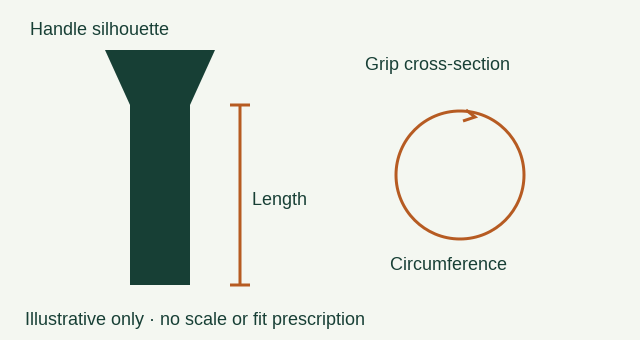
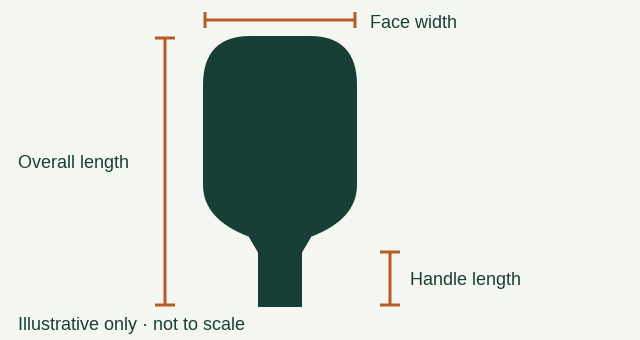
Grip circumference describes the distance around the grip. Handle length describes length along the handle, but listings may not define whether that includes the throat or only usable wrapped space. Overall paddle length is a third measurement. Do not swap these figures or silently repair a mislabeled listing. If a number is explicitly called circumference, it is not established handle length.
A named thin or standard option is useful only when it belongs to the exact model and selected option. Photographs can identify visible model markings but do not measure circumference or confirm the option you will receive. Where selection is unconfirmed, keep the recommendation about the listed option rather than promising the fit of every paddle in the family.
Two-handed room is a personal fit check
A listed longer handle can be a starting point when you use two hands, but length alone does not guarantee that your grip arrangement fits. Compare usable space, circumference and the shape near the throat. Marketing such as two-handed backhand or tennis-style grip is not a standardized fit measurement. Comfort opinions from other customers remain subjective and can differ from yours.
An added overgrip changes the grip you hold;do not assume its finished dimensions match the original specification. Check your own arrangement rather than treating an accessory as a guaranteed correction. This guide does not prescribe equipment to treat pain or injury.
A practical shortlist
Record the exact model and generation, the selected grip option, individual-paddle mass or range, grip circumference and usable handle length where supplied. Mark unknowns honestly. Separate seller specifications from customer impressions and independent measurements. Favor the option whose known specifications address your stated preference;do not invent a score or a performance advantage to fill a missing field.
Before ordering, check the actual option and any applicable return terms from the seller. This is not a guarantee that returns are offered or that any particular fit can be obtained. No current price, availability, warranty or tournament-eligibility assurance is made.